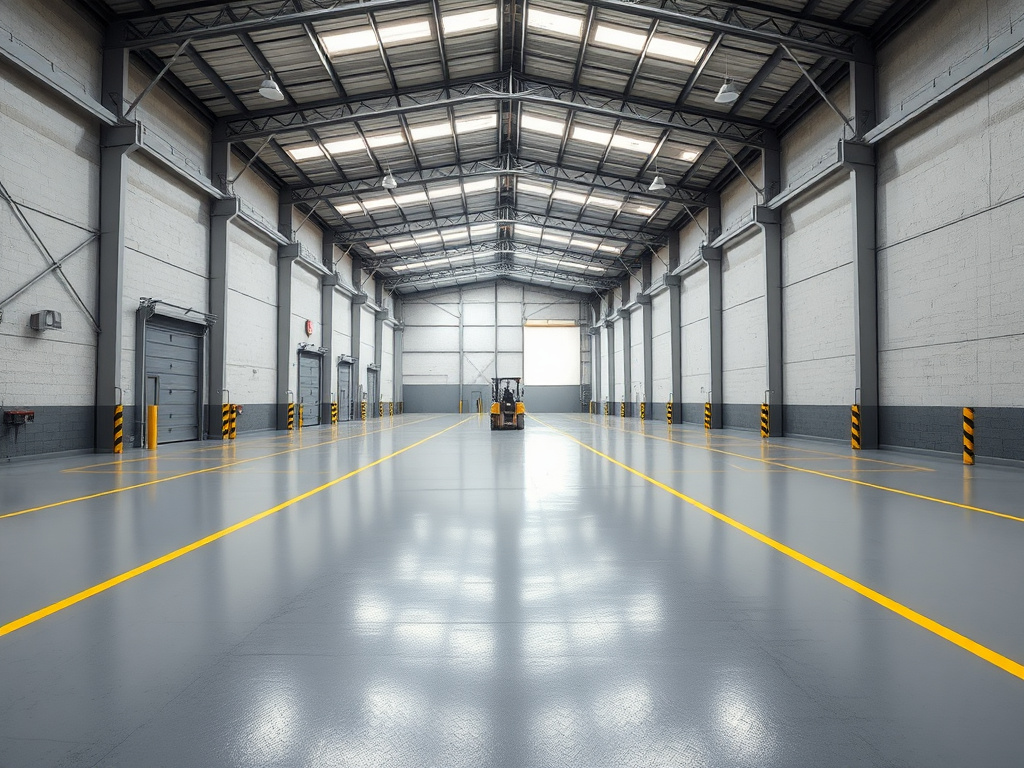
Commercial Floor Coating — Florida
Commercial, Industrial & Warehouse Floor Coatings — Florida
Seamless polyurea and polyaspartic floor systems built for forklift traffic, grease, standing moisture and Florida's humidity — installed on the schedule your operation actually runs on.
Facilities we coat
Warehouse floor coating, industrial concrete coating and more
“Warehouse floor coating” and “industrial concrete coating” cover a wide range of buildings, and each one loads a floor differently. A distribution center in Tampa deals with constant forklift and pallet-jack traffic. A Jacksonville manufacturing plant deals with point loads from heavy equipment and machinery vibration. A commercial kitchen deals with standing grease, hot water and constant wash-down. We spec a different system build for each one rather than running the same generic coating across every job.
Across Florida we coat warehouses and distribution centers, manufacturing and processing plants, aviation hangars and maintenance bays, commercial kitchens and restaurants, breweries and food-and-beverage production floors, healthcare and laboratory floors, retail and showroom floors, and cold storage or freezer floors. If your facility falls outside that list, tell us what the floor sees day to day and we'll tell you honestly whether a polyurea or polyaspartic system is the right call.
- ✓Warehouses and distribution centers
- ✓Manufacturing and processing plants
- ✓Aviation hangars and maintenance bays
- ✓Commercial kitchens and restaurants
- ✓Breweries and food & beverage production floors
- ✓Healthcare, laboratory and clean-room-adjacent floors
- ✓Retail, showroom and big-box floors
- ✓Cold storage and freezer floors
Duty cycle & film build
Forklift traffic, point loads and abrasion — spec'd for the real duty cycle
The most common reason a warehouse floor coating fails early isn't bad material — it's an under-built system installed for a traffic level the floor never actually sees. A 20 mil retail coating looks fine on day one and starts showing steel-wheel wear within months once forklifts, pallet jacks and rolling racks start crossing it every shift. We build film thickness to the duty cycle first, then finish for the look you want.
| Light foot & cart traffic (retail, showroom) | 20–30 mil polyaspartic system with decorative flake or quartz broadcast |
|---|---|
| Forklift & pallet-jack traffic (warehouse, distribution) | 40–60 mil reinforced polyurea/polyaspartic build with slip-resistant texture |
| Heavy manufacturing & point loads (plants, hangars) | 80–125 mil high-build polyurea base coat, steel-trowel or broadcast finish |
| Cold storage & freezer floors | Flexible polyurea system rated for repeated freeze-thaw and thermal-shock movement |
| Commercial kitchen & wash-down areas | Chemical- and grease-resistant polyurea/epoxy hybrid with heavy-broadcast slip texture |
Typical film-build ranges by traffic type. Final spec depends on substrate condition, moisture testing and load data for your facility.
Kitchens, plants & wash-down areas
Chemical, grease and sanitation resistance
Commercial kitchen floor coating and restaurant floor coating jobs live under a different kind of stress than a dry warehouse aisle — standing grease, hot degreasers, steam-cleaning cycles and constant foot traffic in wet shoes. A polyurea or polyurea/epoxy hybrid system resists the fats, oils and cleaning chemicals that break down painted or sealed concrete within a year or two, and it takes a heavier slip-resistant broadcast than a typical warehouse floor.
The same resistance profile carries over to breweries, food-and-beverage production floors and plants that wash down equipment daily. We match the broadcast texture and film build to how wet the floor stays during a normal shift, not just how it looks dry in a showroom sample.
Scheduling
Downtime is the real cost — not the coating
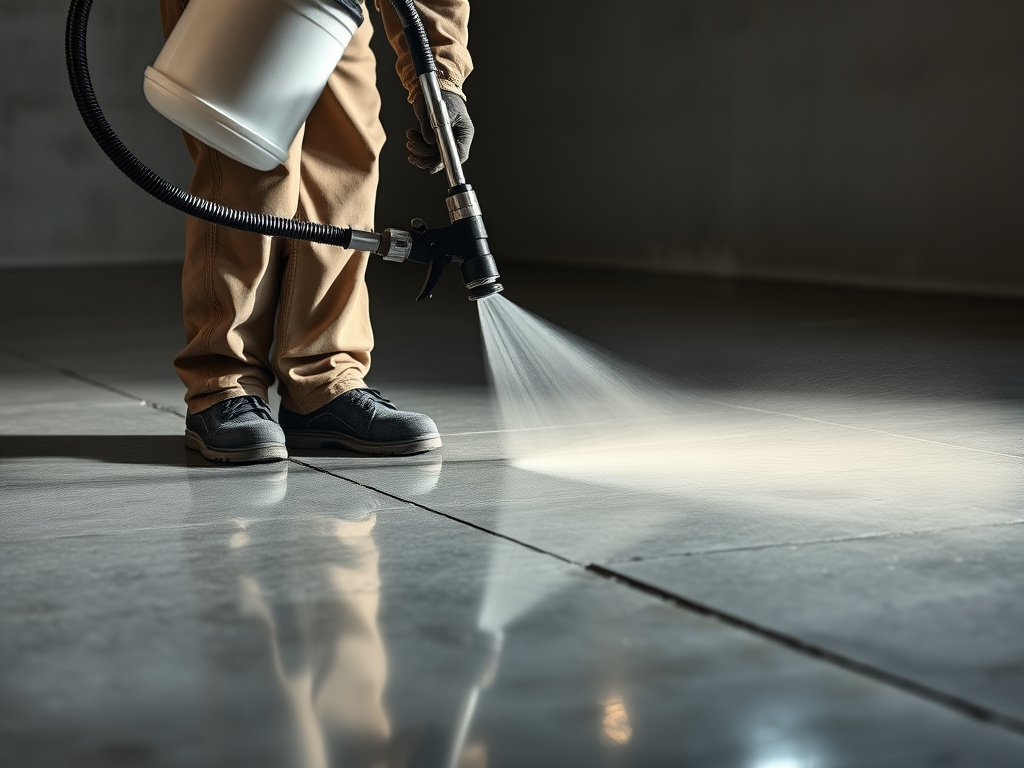
For most facility managers, the material spec is the easy part. The hard part is getting a floor coated without stopping shipping, production or service. We schedule around your calendar — overnight windows, single-day shutdowns, or a bay-by-bay phased sequence that keeps the rest of the building fully operational while one section cures.
Walk & Sequence
We walk the facility with your team, map bay boundaries, and set an install order that keeps critical operations running.
Off-Hours Mobilization
Crews and equipment stage after close or before shift start — no daytime forklift conflicts, no blocked docks.
Prep Per Bay
Each bay is diamond-ground, vacuumed and moisture-checked on its own timeline, isolated from the bays still in service.
Install & Cure
Polyurea and polyaspartic systems set fast — most bays are back in service the same shift or by the next morning.
Handback & Next Bay
We hand the finished bay back to your team and roll the crew straight into the next section on schedule.
Safety finishes
Safety and compliance-referenced finishes
Facility floors carry more than a color scheme — they carry the safety and traffic-management plan for everyone walking or driving on them. We build slip-resistant broadcast, striping and color-coded aisles directly into the coating rather than painting them on afterward, so the markings wear at the same rate as the floor around them instead of peeling early.
- ✓Anti-slip aggregate or quartz broadcast sized to the wet/dry traffic risk in each area
- ✓Painted or thermoplastic-style line striping for aisles, staging zones and pedestrian paths
- ✓Color-coded traffic lanes and hazard zones matching the facility's existing safety plan
- ✓ADA-referenced ramp transitions and threshold detailing at dock doors and entries
- ✓High-visibility markings around electrical panels, fire equipment and emergency exits
Moisture in Florida slabs
Moisture vapor transmission on Florida's high water table
Florida's combination of humidity and a shallow water table pushes moisture up through a slab-on-grade floor at rates most coating manufacturers never designed for in the Midwest or Northeast. When that vapor gets trapped under a film that can't handle it, the result is blistering, delamination and a floor that needs to be torn out and redone within a year or two.
We test slabs for moisture-vapor emission before finalizing a system, and where readings run high we build a moisture-mitigating primer into the spec instead of hoping the topcoat holds. It's a cheaper conversation to have before installation than after a floor fails.
Detailing
Cove base, trench drains and sanitary detailing
Food-service and industrial floors get judged on the details more than the field coating — cove base transitions at the wall, sealed trench drains, and radius corners that don't trap water or debris. We integrate cove base into the same seamless polyurea system rather than caulking a separate strip afterward, and we detail drain surrounds so the floor pitches cleanly instead of ponding at the edges.
The same sanitary detailing applies in industrial settings with wash-down zones, equipment pads and process areas where standing water or spilled product needs somewhere clean to go.
Joints
Joint treatment and armored joints in heavy traffic
Control and construction joints are the first place a floor coating fails under repeated forklift and cart traffic — the coating edge chips, the joint filler pumps out, and debris starts collecting in the gap. In heavy-traffic aisles and load-transfer zones we detail joints with a semi-rigid filler and, where duty cycle calls for it, an armored joint system that takes the wheel impact instead of the floor edge.
Working with GCs & facility managers
Bid documents, submittals and spec support
General contractors and facility managers need more than a verbal quote — they need data sheets, sample boards and a written schedule they can build into a submittal package. We provide that documentation up front and can bid directly from an architect or engineer's spec, matching an existing building standard across multiple phases or buildings.
- ✓Manufacturer data sheets and system build-up for the specified film thickness
- ✓Sample boards or a job-site mock-up panel for color, texture and slip-resistance approval
- ✓Written scope, phasing plan and bay-by-bay schedule tied to your operating calendar
- ✓Substrate prep and moisture-testing protocol referenced in the submittal package
- ✓Workmanship warranty terms in writing before mobilization
After install
Maintenance program and recoat scheduling
A polyurea or polyaspartic floor still needs a maintenance rhythm — routine cleaning that matches the chemicals your facility already uses, and a recoat schedule for the highest-wear lanes before they wear through to the substrate. We set that schedule with you at handoff so a forklift aisle gets a topcoat refresh on its own timeline instead of waiting until the whole floor needs replacing.
If your facility also has settling slabs, sunken loading-dock aprons or trip-hazard panels alongside the coating work, our polyurethane concrete lifting crew can level those areas without breaking up the concrete first.
Common questions
Warehouse & industrial floor coating — frequently asked questions
Can you coat a commercial kitchen or restaurant floor without shutting down service?
+
Yes. Kitchen and restaurant floors are almost always scheduled overnight or across a single off-day, with grease- and chemical-resistant polyurea systems that cure fast enough to reopen for the next service period.
What floor coating actually holds up under forklift traffic?
+
Thin retail-grade coatings wear through quickly under steel wheels and point loads. For forklift aisles and staging areas we build a 40–60 mil reinforced polyurea or polyaspartic system, thicker where turns and load transfers concentrate stress.
How is a polyurea floor different from standard epoxy for a warehouse?
+
Polyurea and polyaspartic systems cure in hours instead of days, stay flexible through temperature swings, and resist the moisture-vapor problems that cause epoxy to blister on Florida slabs. That combination is why they've replaced epoxy on most commercial and industrial jobs we bid.
Do you test for moisture before coating a slab-on-grade floor?
+
Yes. Florida's high water table makes moisture-vapor testing a standard part of our process, not an optional add-on. Results determine whether a moisture-mitigating primer is built into the system before the topcoat goes down.
Can you work from our bid documents and specs?
+
Yes. We regularly bid from GC and facility-manager specs, provide data sheets and sample boards for submittal packages, and can match an existing building standard for color, texture and film build across phased projects.
How often does a warehouse or industrial floor need to be recoated?
+
It depends on traffic — pedestrian and light-cart areas can go many years between recoats, while forklift lanes and load-transfer points wear faster and are typically the first zones to need a topcoat refresh.
Get a floor coating spec & quote
Send us your facility details or bid documents and we'll come back with a scoped system, schedule and itemized number.