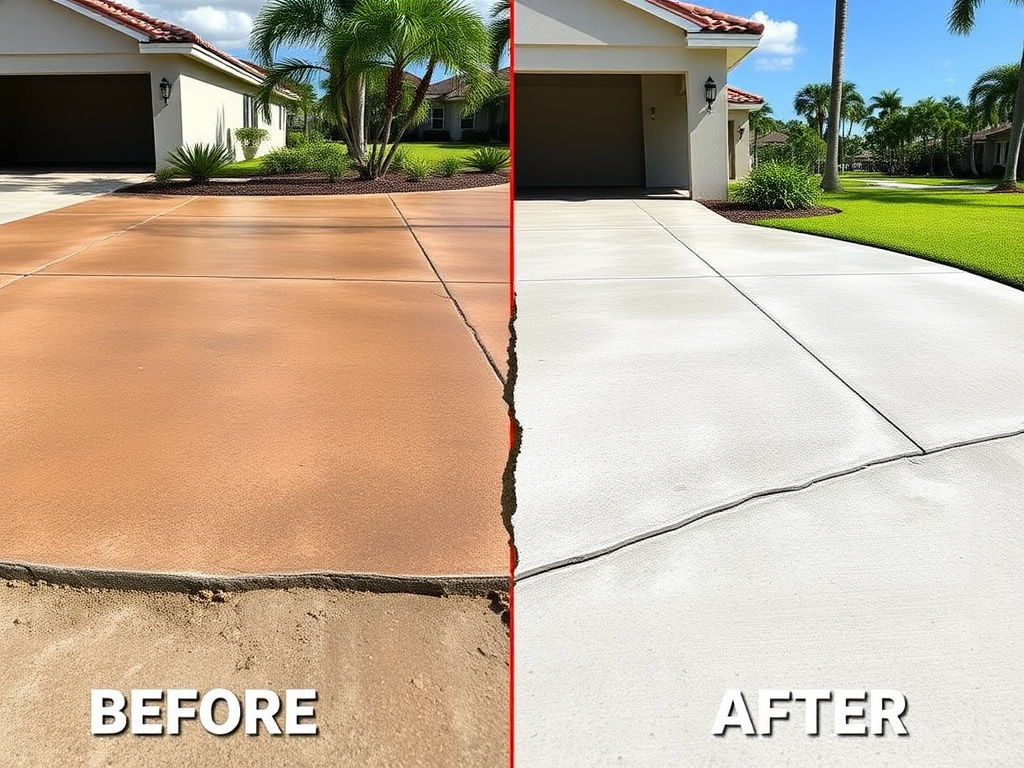
Lifting vs Replacement
Concrete Lifting vs Slab Replacement: Which Fixes Sunken Florida Concrete?
Sunken or uneven concrete has two real fixes: lift it back into place, or tear it out and pour new. They are not interchangeable, and picking the wrong one wastes money either way. Here's how to tell which one your slab actually needs.
Quick answer
If the concrete is sound but the ground moved, lift it. If the concrete itself failed, replace it.
That one distinction decides almost every case. Polyurethane lifting re-levels good concrete that's sitting on soil that settled, eroded, or developed a void underneath it. Replacement is for concrete that's cracked, crumbling, or structurally failed, regardless of what the soil underneath is doing. The table below breaks the comparison down further.
| Typical cost | Lifting: ~$5–$25/sq ft. Replacement: demolition + new pour, usually several times the per-square-foot cost of lifting. |
|---|---|
| Timeline | Lifting: same day to next day in most cases. Replacement: several days to a week or more, including cure time before full use. |
| Mess & demolition | Lifting: small entry holes only, no jackhammering. Replacement: full demolition, debris haul-off, forms and a new pour. |
| Longevity on Florida soil | Lifting: lightweight, moisture-resistant fill that adds minimal new load. Replacement: a new slab poured on the same unaddressed soil conditions can settle again. |
| When it's the right call | Lifting: settlement, uneven panels, minor void-related sinking. Replacement: cracked, crumbling or structurally failed concrete, or a drainage regrade that needs new forms. |
Figures reflect typical Florida market ranges and general project patterns, not a quote for your specific slab.
What lifting fixes
Settlement, void-related sinking, and uneven panels
Polyurethane injection is built for concrete that's structurally intact but sitting at the wrong elevation. That covers a lot of the calls we get statewide: a driveway panel that's dropped after soil settlement, a sidewalk section lifted or lowered by erosion under one edge, a patio corner that's sunk over a compacting fill area, or a small void under a slab from a leaking pipe or washed-out base material.
It works on driveways, sidewalks, pool decks, garage floors, and porch and patio slabs — anywhere a flat, otherwise-sound piece of concrete needs to come back up to grade. The foam expands to fill the void, raises the slab, and gives it new support without adding much new weight to the soil underneath.
What replacement is for
Concrete that's actually broken, not just misplaced
Replacement is the right call when the concrete itself has failed — a slab that's cracked through, spalling or crumbling at the surface, or shattered into multiple pieces that can no longer act as one panel. Lifting a broken slab doesn't fix the break; it just raises broken concrete into a slightly different position.
Replacement is also the answer when the actual problem is drainage or grading that needs new forms and a new slope built into the pour — something injection can't create, since it can only raise an existing slab, not reshape it. If a slab needs a different pitch than it currently has, or the base beneath it needs to be rebuilt from scratch, a repour is the honest recommendation.
Cost side by side
Why lifting usually costs a fraction of a repour
Polyurethane lifting typically runs about $5 to $25 per square foot depending on the amount of lift needed and site access, with small single-panel jobs starting around $500 and a typical whole-driveway or patio-scale project landing in the $1,700 to $4,000 range. Traditional mudjacking is cheaper up front, roughly $3 to $8 per square foot, but it uses a heavier slurry that carries more re-settlement risk on Florida's softer or saturated soil.
Demolition and replacement carries costs lifting simply doesn't: breaking out and hauling off the old slab, forms, rebar or mesh, a full concrete pour, and finish work. For the same square footage, a repour typically costs several times what a lift costs, which is exactly why lifting is worth ruling out first whenever the existing concrete is still structurally sound.
Rule of thumb
- ✓Sound concrete, wrong elevation → lifting is almost always the cheaper fix
- ✓Cracked, crumbling or shattered concrete → replacement is the only real fix
- ✓Needs a new slope or drainage pitch → replacement, since lifting can't reshape a slab
- ✓Unsure which one applies → an on-site inspection settles it in minutes
Timeline
Same-day lift vs a week of demolition and cure time
Most polyurethane lifts finish the same day, and the surface is typically ready to walk or drive on within a couple of hours of the last injection. There's no cure time to wait out, because no new concrete was poured — the existing slab simply gets raised and supported.
Replacement runs on a very different clock. Demolition and haul-off is its own day or more, followed by forming, pouring, and then several days of cure time before the slab can handle regular foot traffic, let alone a vehicle. A full driveway or garage floor replacement is realistically a multi-day to week-plus project once every step is accounted for.
Mess & disruption
No jackhammer, no dumpster, no landscaping damage
Lifting requires small entry holes and a pump line — that's the extent of the footprint. There's no jackhammering, no dumpster parked on the lawn, no dust, and no risk to landscaping, irrigation lines, or an adjacent pool deck or coping.
Replacement is inherently more disruptive: breaking out concrete, hauling debris, bringing in forms and often equipment that needs a clear path to the work area. For a driveway or pool deck close to landscaping or a structure, that disruption is a real cost even when it's not on the invoice.
Florida soil specifically
Why weight matters more here than in most states
A lot of Florida settlement comes back to the same root cause: soft, sandy, or saturated soil that compacts and shifts more than it would in firmer ground. That matters directly for which repair holds up long term. Polyurethane foam is lightweight and largely unaffected by moisture, so lifting a slab with it adds very little new load to soil that may already be under stress.
A fresh concrete pour, by comparison, is heavy — and if it's poured on the exact same unaddressed soil conditions that caused the original settlement, there's nothing stopping that new slab from settling again on the same timeline. That's why a soil or drainage issue is worth understanding before choosing replacement: without addressing what caused the original movement, a repour can end up repeating the same problem a few years later.
When lifting isn't enough
Active voids and severely damaged slabs need more than injection
Lifting assumes the slab is structurally sound and the void underneath it is something injection can fill and stabilize. That's not always the case. An active settlement area, particularly in Florida's karst limestone regions — Pasco, Hernando, Hillsborough, Polk, Marion and Alachua counties, often called Sinkhole Alley — can involve a void too large or too active for injection alone, and may need structural fill placed first before any lifting happens.
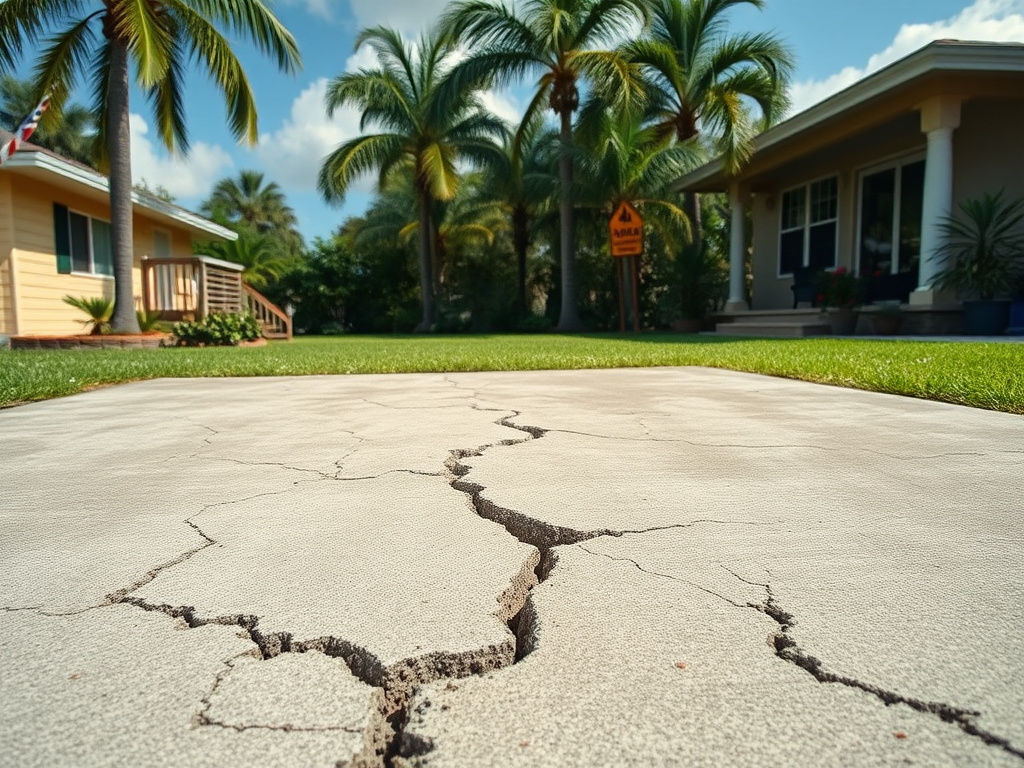
Severely cracked or shattered slabs fall outside lifting for a different reason: the concrete itself is no longer one continuous panel, so there's nothing solid left to lift as a unit. In both situations, the honest answer is a more involved repair or a recommendation to replace, and we'll say so plainly rather than injecting foam under a slab that isn't going to hold.
How we decide
The inspection is what actually answers the question
On site, the call comes down to a short set of checks: is the concrete itself still structurally sound, how much of the panel or area is affected, how large and active is the void or settlement underneath it, and what condition is the surrounding soil and drainage in. Those answers point clearly to lifting, replacement, or occasionally a combination — lifting one section while a separately damaged section gets replaced.
We'll walk you through which category your concrete falls into before any work starts, and why, so the recommendation makes sense rather than landing as a sales pitch for whichever service is more profitable that week.
Worked examples
Three typical Florida jobs, cost and timeline
These are typical examples built from common Florida job patterns, not a quote — every slab is different once someone's actually looked at it.
Sunken driveway apron
A single low panel near the garage, roughly 10 by 12 feet. A typical polyurethane lift for a panel this size lands in the $500–$1,500 range and finishes in a few hours the same day. A comparable demolition-and-repour would mean forms, a new pour and several days before the driveway can carry a car again.
Settling pool deck section
A pool deck corner that's dropped away from the coping, around 150 square feet. Lifting that section typically falls in the $1,000–$3,000 range and can usually be finished in a single visit without draining the pool or disturbing the coping. Replacing that section means cutting out concrete right at the pool edge — considerably more disruptive.
Garage floor slab
A garage slab with one corner settled from a plumbing-related void, in the 400–500 square foot range. A structural-fill-plus-injection repair here often lands in the $1,700–$4,000 range as a whole project. A full garage slab replacement would mean emptying the garage, demolition, a new pour and days of cure time before it's usable again.
Common questions
Lifting vs replacement, quick answers
More detail on how we scope a job and what changes the price is on our concrete lifting page and our driveway and sidewalk leveling page.
Is it cheaper to lift or replace sunken concrete?
+
In almost every case where the concrete itself is sound, lifting is the cheaper option, typically a fraction of what a demolition-and-repour costs for the same area. Replacement only becomes the more sensible cost comparison when the slab is cracked, crumbling or structurally compromised enough that lifting a broken slab wouldn't hold anyway.
Does mudjacking count as the same thing as polyurethane lifting?
+
No. Mudjacking uses a heavier cement-based slurry pumped under the slab, which adds significant new weight to soil that may already be soft or saturated — a real concern on Florida ground. Polyurethane foam is far lighter and expands to fill voids without adding that same load, which is why it tends to hold longer on Florida's soil profile.
Can a slab be lifted more than once if it settles again?
+
Yes, in most cases. If a lifted panel settles again due to a new drainage or erosion issue, it can typically be re-injected. Repeated settlement in the same spot is also a signal worth investigating further, since it can point to an ongoing water issue or a larger void that needs to be addressed at the source.
Not sure which one your slab needs?
Send us a photo or two and we'll tell you honestly whether it's a lifting job, a replacement job, or something in between — before we ever talk price.