Secondary Containment Coating — Florida
Polyurea Secondary Containment, Tank & Roof Coatings — Florida
Seamless, monolithic polyurea linings for containment berms, sumps, trenches and tank exteriors — spec'd to the stored product and built for Florida's rainy season and storm exposure.
What it is
What spray-applied polyurea containment is
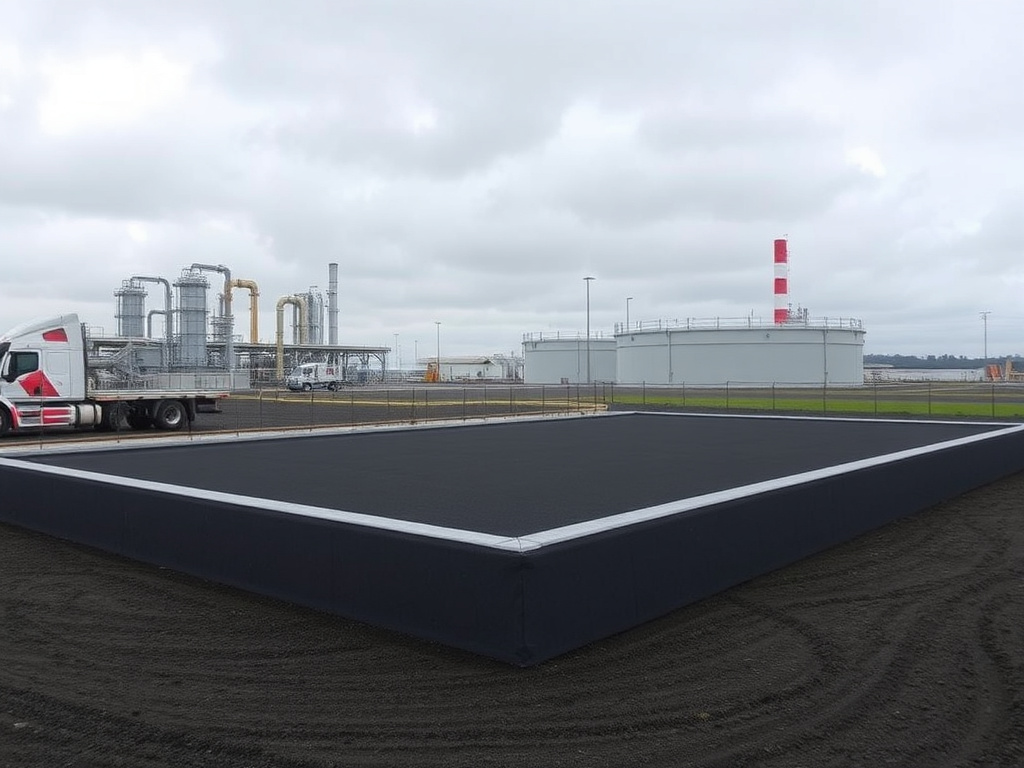
Secondary containment coating is a spray-applied polyurea membrane installed over a berm, sump, trench or containment structure to hold a stored liquid on-site if the primary tank, pipe or vessel ever fails. It's a physical barrier requirement at fuel terminals, chemical storage sites, agricultural facilities and water/wastewater plants — anywhere a spill has to stay inside a defined area instead of reaching soil or stormwater.
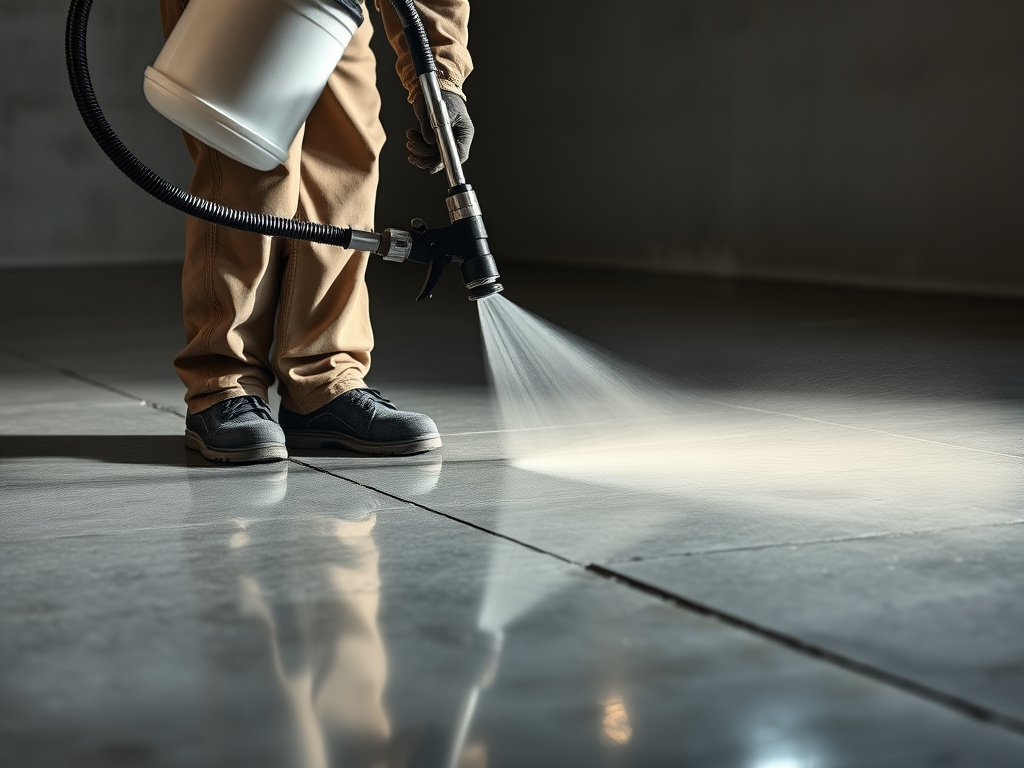
Because it's sprayed rather than sheet-applied, the membrane follows every corner, penetration and irregular surface in a real containment structure instead of relying on cut seams to match the geometry.
Most of this work starts with a site walk rather than a phone quote. We look at what's stored, how the containment area is currently built, and where the existing surface — concrete, steel or bare soil with a liner — is already showing cracking, spalling or wear. That walk is what lets us come back with a system spec instead of a generic per-square-foot number.
- ✓Fuel and petroleum storage and dispensing sites
- ✓Chemical storage, blending and process areas
- ✓Agricultural chemical and fertilizer storage
- ✓Water and wastewater treatment structures
- ✓Ports, terminals and bulk-loading facilities
Structures we line
Berms, dikes, sumps, trenches, pits and loading pads
- ✓Containment berms and dikes around above-ground tanks
- ✓Concrete and steel sumps beneath process equipment
- ✓Trenches and channels routing runoff to a containment point
- ✓Containment pits under valves, pumps and transfer stations
- ✓Truck and rail loading pads where spills concentrate
Why seamless matters
A seamless monolithic membrane — no seams, no welds
Sheet liners and welded systems are only as good as their weakest seam. Every welded joint is a potential failure point, and Florida's heavy rain events put constant hydrostatic pressure on containment structures that a seam has to resist year after year. A spray-applied polyurea membrane cures as one continuous surface with no seams to inspect, re-weld or eventually fail.
That matters most during the exact conditions Florida sees the most — sustained downpours that fill a containment area faster than a marginal system was ever tested for.
Before we spec anything
Chemical resistance and product compatibility review
Not every polyurea formulation resists every stored product the same way. Before we spec a containment or tank lining system, we review what's actually stored on-site — the chemical, fuel or process fluid, its concentration, and its temperature range — against manufacturer chemical-resistance data. That review happens before installation, not after a failure shows up in the field.
This step matters more on mixed-use containment areas — a berm that catches runoff from two or three different storage tanks, or a sump that sees intermittent exposure to a cleaning or process chemical alongside the primary stored product. We spec for the worst combination the area will actually see, not just the primary product on the site drawing.
Tanks & roofs
Tank exteriors, interiors, lids and roof coatings
The same spray-applied polyurea system extends beyond containment structures to the tanks themselves — exteriors, interiors, lids and low-slope roof surfaces. On a tank exterior, a polyurea topcoat resists Florida's UV exposure far longer than a standard paint system. On a roof or tank lid, the seamless membrane resists the ponding water that collects during Florida's rainy season instead of finding a way through a seam or flashing detail.
Interior tank linings follow the same chemical-compatibility review as containment systems, matched to whatever the tank actually holds. Exterior work also has to account for shading and sun exposure across the tank shell — a tank sitting in full Florida sun all day needs a different UV-stability expectation than one shaded by an adjacent structure.
Detailing
Penetrations, terminations and reinforcement fabric
Containment and tank linings rarely fail in the field of the membrane — they fail at the details. Pipe penetrations, wall-to-floor transitions, expansion joints and termination edges all get reinforcement fabric embedded in the polyurea before the final build coat goes on, so those transition points carry the same monolithic strength as the rest of the surface instead of being the first place a leak path opens up.
Terminations at the top edge of a berm wall or the rim of a sump get the same attention — a mechanically fastened and sealed termination bar rather than a feathered edge that can lift or wick moisture underneath the membrane over time.
Substrate prep
Substrate prep on concrete, steel and geotextile
Concrete containment structures get diamond-ground or shot-blasted to open the surface profile and remove laitance before primer. Steel tanks and sumps get abrasive-blasted to the profile the primer manufacturer specifies. Where a geotextile or fabric underlayment is part of the system, we confirm it's properly anchored and seamed before the polyurea goes over it. Skipping substrate prep is the single most common reason a containment lining delaminates early — we don't skip it.
On older concrete structures we also check for existing cracking, prior repairs and rebar exposure before prep starts. A lining installed over an unaddressed structural crack will eventually telegraph that crack back through the membrane, so structural repair happens first and the polyurea goes down as the final, seamless layer.
Verifying the work
Testing — holiday testing, adhesion pulls and thickness checks
| Holiday / spark testing | Full-surface electrical inspection to locate pinholes and thin spots before the liner goes into service |
|---|---|
| Adhesion pull testing | On-site pull tests confirming bond strength to the prepared concrete or steel substrate |
| Thickness verification | Wet-film and dry-film thickness checks across the membrane, not just at a few spot locations |
| Substrate moisture & profile check | Surface profile and moisture readings confirmed before primer goes down |
Standard verification steps run on every containment and tank lining project before handoff.
Storm season
Hurricane-season scheduling and wind-uplift resistance
Florida's hurricane season shapes two things about this work — when we schedule it and how we detail it. Polyurea cures fast enough that most containment and roof-coating jobs can work around a storm window without leaving a partially finished surface exposed. Once cured, edge and termination detailing is built to resist the wind-driven uplift forces a low-slope roof or tank lid coating sees during a named storm, not just steady-state weather.
If your facility also needs waterfront protection, see our marine, dock and seawall coating work for structures exposed to tidal cycling and storm surge.
Who we work with
Industries served across Florida
Containment and tank lining work spans a specific set of industries with a specific set of stored-product concerns. We bid and install for facilities across each of these, matching the system to the product on-site rather than defaulting to one formulation for every job. For floor systems inside the same facility, see our warehouse and industrial floor coatings page.
- ✓Agriculture — fertilizer and chemical storage sites
- ✓Fuel and petroleum — tank farms, dispensing and transfer areas
- ✓Water and wastewater — treatment plant structures and containment
- ✓Ports and marine terminals — bulk liquid handling
- ✓Data centers — generator fuel containment and fluid containment areas
Common questions
Secondary containment & tank coating — frequently asked questions
What is spray-applied polyurea secondary containment?
+
It's a seamless membrane sprayed directly onto a berm, sump, trench or tank surface, forming one continuous barrier with no seams or welded joints for a stored chemical or fuel to find a way through.
Where is secondary containment typically required on a site?
+
Around above-ground fuel and chemical storage tanks, under pumps and valves, along transfer trenches, and on loading pads where a spill needs somewhere controlled to go instead of reaching soil or stormwater.
How do you know a polyurea system is compatible with what we're storing?
+
We review the stored product and its concentration against manufacturer chemical-resistance data before spec, so the lining is matched to what actually sits in the containment area rather than a generic system.
Can polyurea be used on a tank exterior or as a roof coating?
+
Yes. The same spray-applied membrane goes over tank exteriors, lids and low-slope roofs, giving UV resistance and a seamless barrier against ponding water through Florida's rainy season.
How do you confirm the liner doesn't have any weak spots?
+
Every containment and tank lining job gets holiday/spark tested across the full surface, along with adhesion pull tests and thickness checks, before it's signed off as complete.
Does hurricane season affect scheduling or the system itself?
+
It affects scheduling more than the material — polyurea cures fast enough to work around storm windows, and reinforcement detailing at edges and terminations is built to resist wind-driven uplift once cured.
Get a containment or tank lining quote
Send us your site details, stored product and drawings if you have them — we'll come back with a compatible system, schedule and itemized number.