Real Protection, Not a Drop-In Gap
Spray-In Polyurea Truck Bed & Trailer Liners — Florida
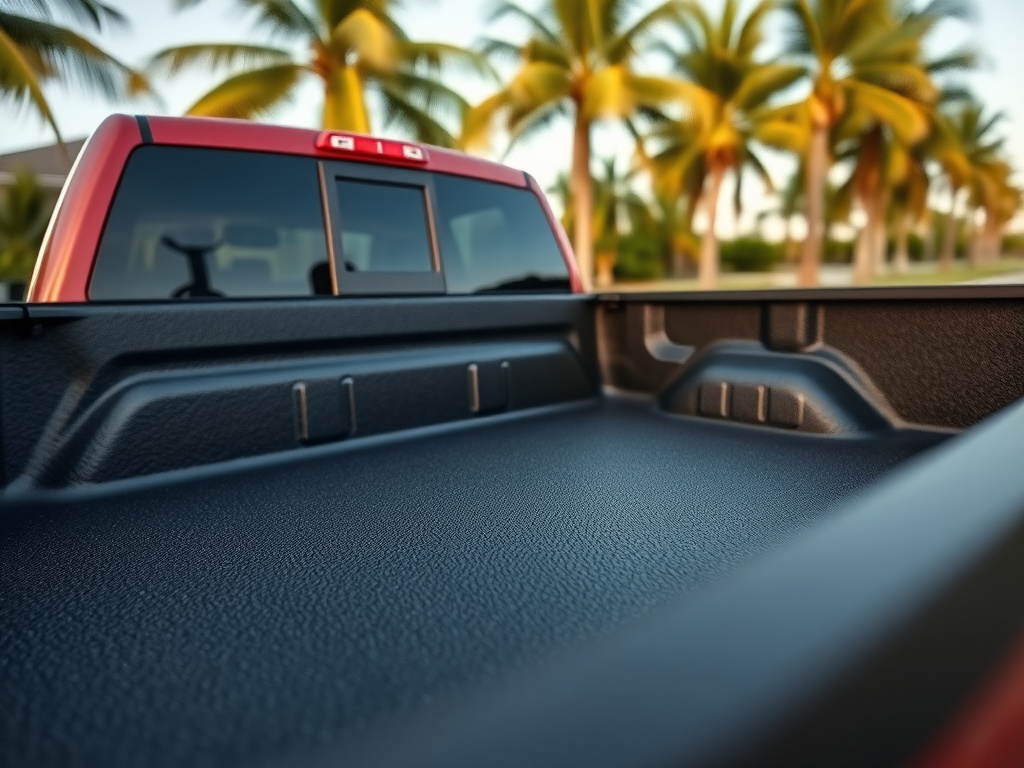
A bonded polyurea liner protects the bed floor it's actually sprayed onto — no gap underneath to trap sand, grit and salt-laden moisture the way a drop-in liner does.
Spray-in vs drop-in
Why a drop-in liner protects less than it looks like it does
A drop-in plastic liner is never a true fit — it flexes independently of the bed floor and rails, and that mismatch leaves a gap where sand, gravel, grit and moisture collect over time. In Florida, that trapped moisture routinely carries salt from coastal air or a boat launch, and it sits against bare metal exactly where you'd want protection most. The liner ends up hiding corrosion rather than preventing it, and you usually don't find out until the liner comes out for a trade-in inspection.
A spray-in polyurea liner bonds directly to the prepped metal, so there's no cavity underneath to trap anything. Whatever protection the liner is providing, it's providing it against the actual bed floor, not a floating plastic shell sitting a few millimeters above it.
Bonded
No gap under the liner
Same-Day
Typical bed turnaround
UV-Stable
Built for full Florida sun
One Crew
Beds, trailers & accessories
The chemistry difference
Polyurea vs polyurethane bedliner chemistry
Both polyurea and polyurethane show up in bedliner products, and the difference matters more than most buyers realize. Polyurea cures fast and tolerates a wider range of humidity and temperature during application, which is exactly the swing Florida shops deal with year-round. It also holds flex and impact resistance a little better as it ages, which shows up as fewer stress cracks at rail edges and corners after a few years of loading and unloading.
Straight polyurethane liners can still perform well, but they're more sensitive to application conditions and tend to be the formulation used in lower-cost drop-in and roll-on products rather than professional spray systems.
- ✓Fast cure — bed is drivable the same day
- ✓Flexes with the bed floor instead of cracking
- ✓Holds up to repeated impact from tools and equipment
- ✓Bonds directly to metal, aluminum and most factory coatings
- ✓Consistent film thickness across the whole bed
Sun and salt air
UV and salt-air stability near the coast
A truck bed sits in direct sun for hours most days, and cheaper aftermarket liners chalk, fade and go brittle under that UV load faster than most owners expect. Near the coast, salt-laden air accelerates corrosion on any exposed metal edges the liner doesn't fully cover — rail caps, tailgate hinges, drain holes. We spec UV-stable polyurea systems and pay attention to those edge details during application, because that's where a cut-rate liner job shows its age first.
What actually happens in the bay
Prep, masking and edge treatment
Strip & Clean
Bed is stripped of any prior coating residue, degreased and cleaned to bare, sound material.
Sand & Scuff
Mechanical abrasion opens the surface profile so the liner has something to actually grip.
Mask
Rails, tailgate seams and body panels get precisely masked — over-rail or under-rail, your call.
Spray
Heated plural-component equipment applies the liner in a consistent, even film thickness.
Cure & Inspect
Fast-cure chemistry means the bed is ready the same day, checked edge-to-edge before handoff.
Texture and thickness
Texture and thickness options for how you actually load
A daily-driver personal truck and a landscaping or construction truck need different specs. We adjust texture — from a fine non-slip finish to a more aggressive broadcast profile — and film thickness based on what actually goes in and out of the bed. Heavier texture improves footing and cargo grip when loading equipment, but it's not something every truck needs, so we talk through actual use before defaulting to the heaviest option.
| Fine non-slip finish | Personal trucks, everyday cargo, easier to sweep clean |
|---|---|
| Medium texture | Mixed-use trucks — tools, equipment, occasional heavy loads |
| Aggressive broadcast texture | Construction, landscaping, maximum cargo grip |
| Standard film thickness | Sized to expected impact and abrasion load |
Texture and thickness are confirmed during the vehicle walk-around, not assumed from truck size alone.
Beyond the pickup bed
Trailer floors, ramps and boat-trailer bunks
The same spray-in approach protects utility trailer floors, tailgate ramps, and boat-trailer bunks and fenders — surfaces that take repeated impact from loading equipment, dragging chains, or a hull sliding on and off at the ramp. Trailer floors in particular benefit from the same abrasion resistance and slip-friendly texture as a truck bed, since they're loaded and unloaded just as often, often outdoors and uncovered.
- ✓Utility and landscape trailer floors
- ✓Tailgate and loading ramps
- ✓Boat-trailer bunks, fenders and cross-members
- ✓Flatbed and dump-body liners
- ✓Toolbox interiors and lids
Beyond the bed
Rocker panels, bumpers, toolboxes and flatbeds
Once a truck or trailer is in the bay, it's common to extend the same protection to rocker panels, front and rear bumpers, running boards, and toolbox exteriors — the spots that take the most rock chips, curb scrapes and door-ding abuse on a work vehicle. Commercial flatbeds and dump bodies get the same treatment across the full deck and headboard, since those surfaces see even heavier point-loading than a standard pickup bed.
What it costs, and how long it takes
Cost and turnaround
A standard pickup bed liner is typically a same-day job from drop-off to pickup. Pricing scales with bed size, texture, thickness, and any add-ons like rails, tailgate, or bumpers. Trailer floors and flatbeds price by square footage and condition of the existing surface. The fastest way to a firm number is a quick look at the vehicle — send photos or bring it by.
Larger commercial fleets and multi-unit trailer jobs can be scheduled in batches to minimize vehicle downtime — ask about fleet scheduling when you request a quote.
Living with the liner
Care and what to expect long-term
A properly applied polyurea liner asks very little in return — an occasional rinse to clear dirt and debris, and keeping harsh solvents off the surface unless they're confirmed compatible. It's built to be essentially permanent bed protection rather than something you plan to redo on a schedule, though how a truck is actually used always plays a role in how it looks years down the road.
Common questions
Bed & trailer liner FAQ
More on coating chemistry, scheduling and other services is on the full FAQ page.
Go to the FAQHow much does a spray-in bedliner cost?
+
It depends on truck size, texture, thickness, and whether rails, tailgate and bumper are included. A standard pickup bed is a same-day job; the exact number comes from a quick look at the vehicle so we can confirm bed style and any extras you want covered.
What are the disadvantages of a drop-in bed liner compared to spray-in?
+
A drop-in liner is never a perfect fit — it flexes against the bed floor and rails, and that gap traps sand, grit and moisture underneath where you can't see it. In Florida, that trapped moisture is frequently salt-laden, which accelerates corrosion on the bed floor exactly where the liner was supposed to protect it. Spray-in polyurea bonds directly to the metal, so there's no gap to trap anything.
Is a spray-in bed liner worth it for daily truck use?
+
For a truck that actually hauls — tools, mulch, gravel, a dog, a generator — yes. The impact and abrasion resistance of a properly applied polyurea liner holds up to daily loading and unloading in a way factory paint or a bare bed floor doesn't, and it protects resale value by keeping the bed floor from denting and rusting.
How long do spray-on bed liners last?
+
A correctly prepped and applied polyurea liner is built to be a long-term, essentially permanent bed protection — it's not a product you expect to redo every few years the way you might a cheap aftermarket coating. Longevity still depends on prep quality and how the truck is used, which we'll go over on your specific vehicle.
Can I spray my own bed liner, or should it be professional-applied?
+
DIY kits exist, but plural-component polyurea requires heated, pressurized spray equipment and fast-reacting chemistry that isn't practical to apply evenly with a consumer kit. Uneven mix ratios or rushed prep are the most common reasons a DIY liner peels, bubbles or wears through early.
What's the difference between polyurea and polyurethane bedliner chemistry?
+
Both are used in bedliners, but polyurea cures faster and tolerates a wider range of humidity and temperature during application than straight polyurethane, which matters in Florida's climate. Polyurea also tends to hold impact and flex resistance a bit better over time, which is why it's become the standard for beds and trailer floors that take repeated abuse.
Is it better to spray or roll on a truck bed liner?
+
Spray application produces a more consistent thickness and a better mechanical bond to the metal than rolling, which tends to leave thin spots at corners and rail edges — exactly where a bed takes the most abuse. We spray every liner for that reason.
What's the toughest bed liner option available?
+
Thicker, high-durometer polyurea systems with an aggressive texture profile hold up to the heaviest abuse — think construction and landscaping trucks — but that spec is usually overkill for a daily-driver personal truck. We match the system to how the bed actually gets used rather than defaulting to the heaviest option every time.
Get a free bed liner quote
Send photos of your truck, trailer or fleet and we'll come back with a scoped number — no obligation.