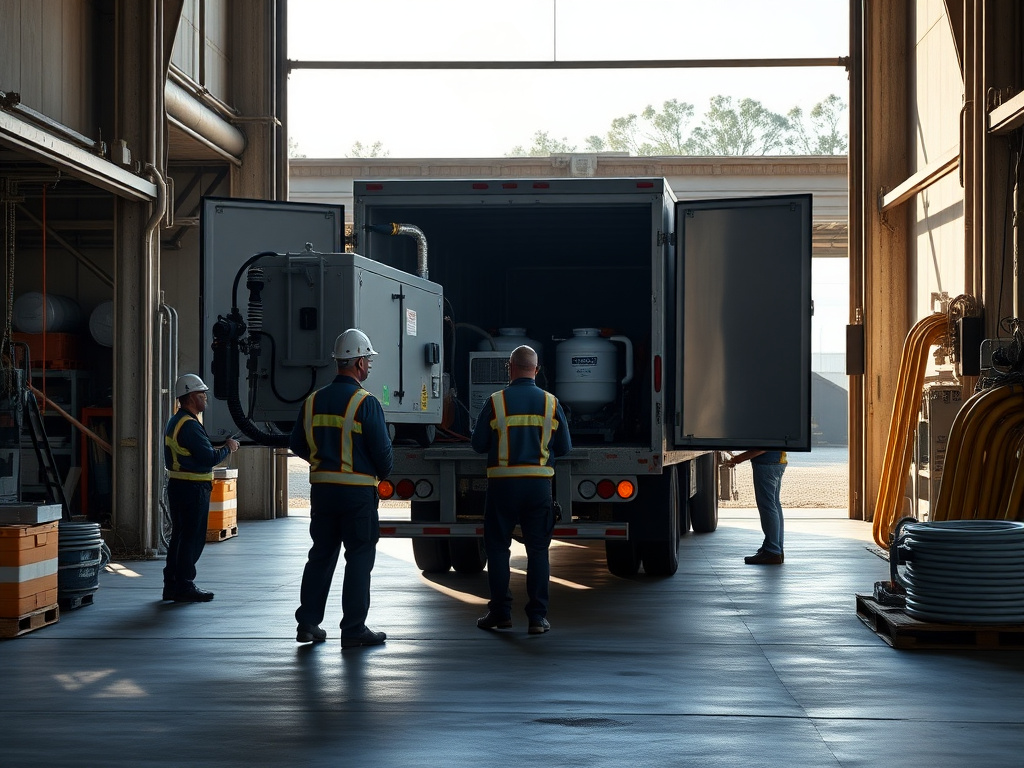
Who's actually doing the work
Florida's Concrete Lifting & Polyurea Coating Specialists
No sales floor, no showroom — our crews run heated plural-component spray rigs and polyurethane injection equipment on job sites across the state. Here's how we work and what we won't overpromise.
Equipment and crews
The two rigs behind everything we do
Florida Polyurea runs two distinct equipment sets, because concrete lifting and coating are two different trades that happen to share a chemistry family. Polyurethane injection equipment drives expanding structural foam through small ports drilled into a settled or sunken slab, raising it back toward level without demolition. Heated plural-component spray rigs mix and apply polyurea and polyaspartic coatings at the precise temperature and ratio the chemistry needs to bond and cure correctly — get either wrong and the coating can bubble, peel, or cure unevenly.
Crews run both systems statewide, moving between residential garages, waterfront docks, commercial floors and sunken driveway slabs depending on what's on the schedule. Keeping the equipment calibrated and the crews current on application technique is a routine, ongoing part of the job, not a one-time setup.
Ahead of any coating job, that same equipment list includes surface-prep tools — diamond grinders and shot-blasters to open the concrete pore structure, and moisture meters to check a slab before anything gets sprayed on it. Ahead of any lifting job, it means core drills, injection ports and the gauges that tell a technician how much a slab has actually moved during the lift, rather than guessing by eye.
Where we work
Florida, statewide — because the ground doesn't stop at county lines
Settlement, sinkhole activity and slab movement don't respect county lines, and neither does our schedule. Crews cover the state end to end, from the karst-heavy sinkhole corridor running through the west-central counties to the coastal metros where marine and hurricane exposure drive most of the coating work. See the full list of Florida service areas or just call — if we're not already working near you, we'll tell you honestly how soon a crew can be.
Working statewide also means the specification changes with the region, not just the drive time. A dock or seawall job on the coast is scoped around saltwater and tidal cycling; a driveway or garage job further inland is scoped around soil settlement and afternoon-storm scheduling. Tell us the city and the conversation starts in the right place.
Why the topcoat matters
Why we specify aliphatic topcoats outdoors, full stop
Standard polyurea base coats are an aromatic chemistry — strong and fast-curing, but prone to yellowing and chalking under direct ultraviolet light. Aliphatic polyaspartic topcoats don't have that problem; they hold their color and clarity under Florida's sun for years. That's why any pool deck, patio, driveway, dock or other surface that sees daylight gets an aliphatic topcoat over the base — indoors, out of the sun, that step matters far less. It's a chemistry decision, not an upsell, and we'll say so plainly if a given job doesn't need it.
Honest diagnosis
What polyurethane lifting can fix — and when we say it can't
Polyurethane injection lifts and stabilizes a settled slab sitting on soil that has compacted, eroded or shifted beneath it. What it cannot do is fill or bridge a genuine subsurface void from active sinkhole activity — that's a structural and geotechnical problem, not a slab-leveling one. When our technicians see signs consistent with a confirmed void rather than ordinary soil settlement, we say so directly and refer the property to a licensed geotechnical engineer for proper subsurface investigation before any lifting work proceeds.
That distinction is the difference between a quick fix that fails again in a year and a repair that actually holds. We'd rather lose a same-day job than lift a slab over a problem lifting can't solve.
In practice, that means a homeowner gets a plain explanation of what the technician is actually seeing — void versus settlement, one slab versus a pattern across the property — before any decision gets made about lifting, structural fill, or bringing in outside engineering. No pressure to sign off on the spot, and no vague language standing in for a real answer.
How we quote
Scoped, itemized quotes — not one-size pricing
Every site is different: slab condition, square footage, prep needed, and access all change the actual work involved. A flat, one-size number papers over that. Ours don't.
A quote built this way takes a little longer to put together than a number quoted over the phone sight unseen, but it holds up once a crew is actually on site with the equipment running, which is the point.
- ✓A site visit or detailed photos before any real number is given.
- ✓Line items for prep, material, labor and any repair work — not a single bundled figure.
- ✓Clear notes on what would change the price if conditions differ once work begins.
- ✓The same scoping standard whether the job is a single garage or a full warehouse floor.
If you're dealing with a sunken slab, a settling driveway, or a floor that needs a coating built for Florida's heat, humidity and UV, start with a concrete lifting evaluation or read the polyurea vs epoxy comparison to see which coating system actually fits your project. Either way, the next step is the same conversation: what's happening on your property, and what it actually takes to fix it right. Reach out through the contact page any time.
Talk to the crew, not a call center
Call, request a quote, or reach out through the contact page — every conversation starts with an honest look at the actual problem.